For independent artists, pressing a small batch of records (100 to 250 units) seems like a simple request. However, from a manufacturing perspective, short run vinyl pressing is one of the most complex challenges a factory can undertake. To understand why most major plants require a minimum order of 500 or 1,000 units, we have to look closely at the physics and economics of analog manufacturing.
The Fixed Costs: Lacquers and Stampers The vinyl production process is heavily front-loaded. Before a single record can be pressed, the audio must be cut into a master lacquer by a cutting engineer. This fragile lacquer is then subjected to electroplating—a chemical process where it is bathed in liquid nickel to create the negative metal „stampers” that will physically press the grooves into the PVC. The cost of mastering, lacquer cutting, and electroplating is exactly the same whether you are pressing 100 copies or 10,000 copies. In a short run, these fixed setup costs are divided among fewer records, which naturally increases the per-unit cost.
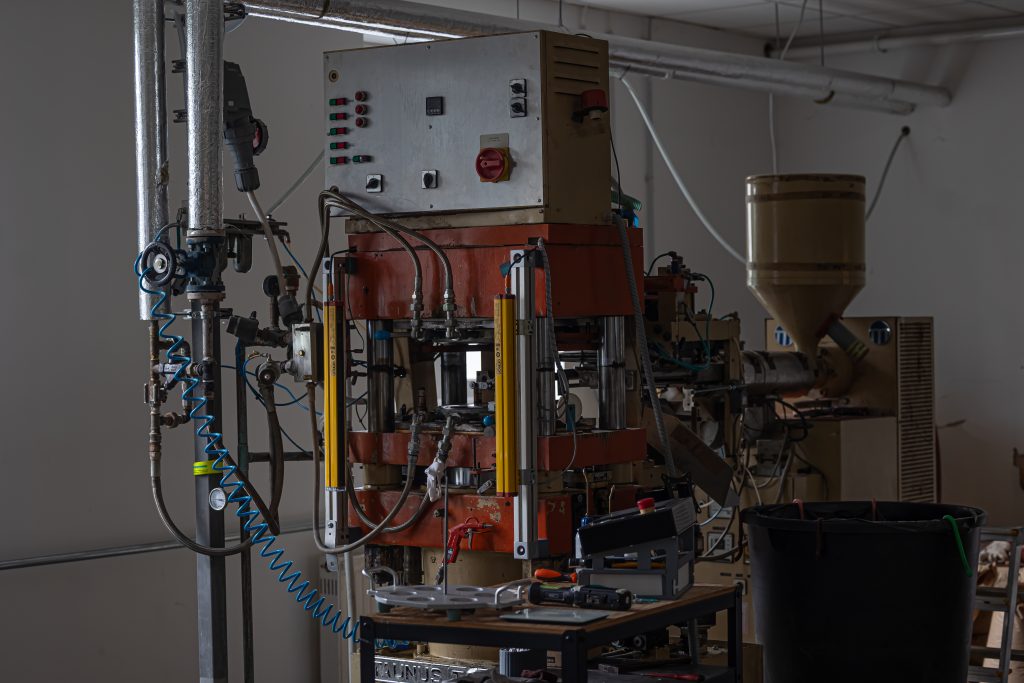
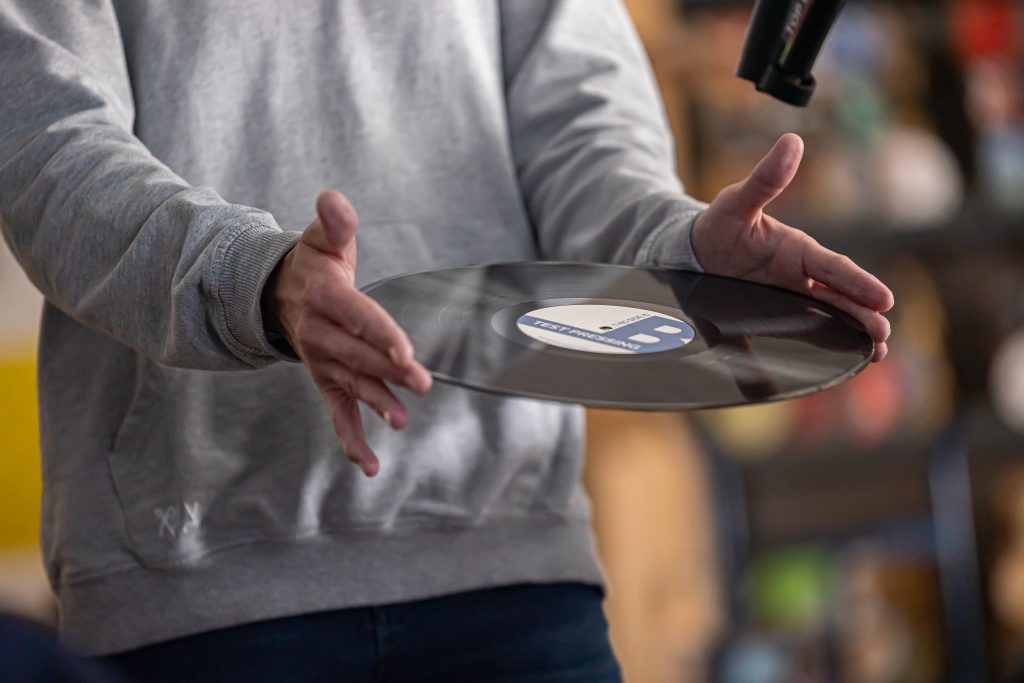
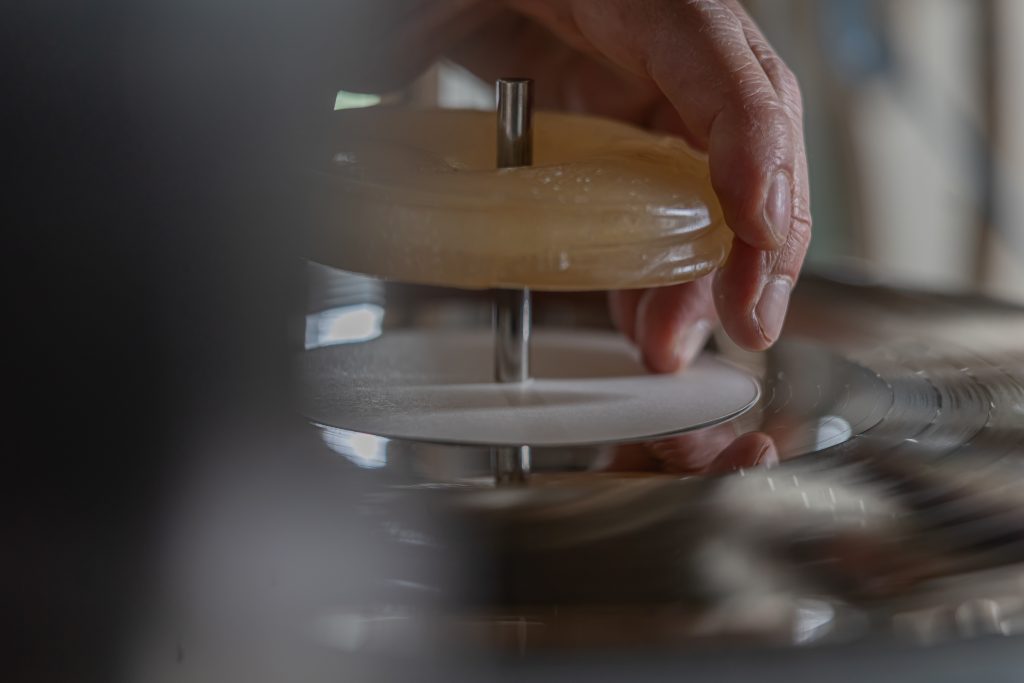
Machine Calibration and The „Warm-Up” Phase Pressing records is not like printing a digital document. A vinyl press is a heavy piece of thermodynamic machinery. When a new set of stampers is loaded onto the press, the operator must carefully calibrate the steam temperature, the cooling water cycle, and the exact extrusion weight of the PVC „biscuit.” During this calibration phase, the first 10 to 20 records pressed are usually defective—they might have un-filled grooves, stitching, or warped edges. These are discarded and recycled. For a major plant pressing 5,000 records, discarding 20 records during setup is a statistical rounding error. For a plant doing a run of 100 records, a 20% waste margin is highly inefficient.
How Boutique Plants Solve the Problem So, how is short run vinyl pressing technically achieved today? It requires a different type of infrastructure. Boutique pressing plants—like Hanaton—utilize specialized, highly agile machinery (such as our restored Dorog presses) and rely on experienced operators rather than fully automated, massive assembly lines. A skilled operator can read the thermodynamics of the machine manually, dialing in the perfect temperature and pressure much faster, significantly reducing the setup waste and turnaround time between different projects.
By optimizing the workflow for agility rather than sheer volume, boutique plants have finally made it technologically and financially viable to press high-quality, small-batch records for the independent music scene.
Are you planning a limited-edition release? Learn more about our technical process and [get a quote for your next pressing here].