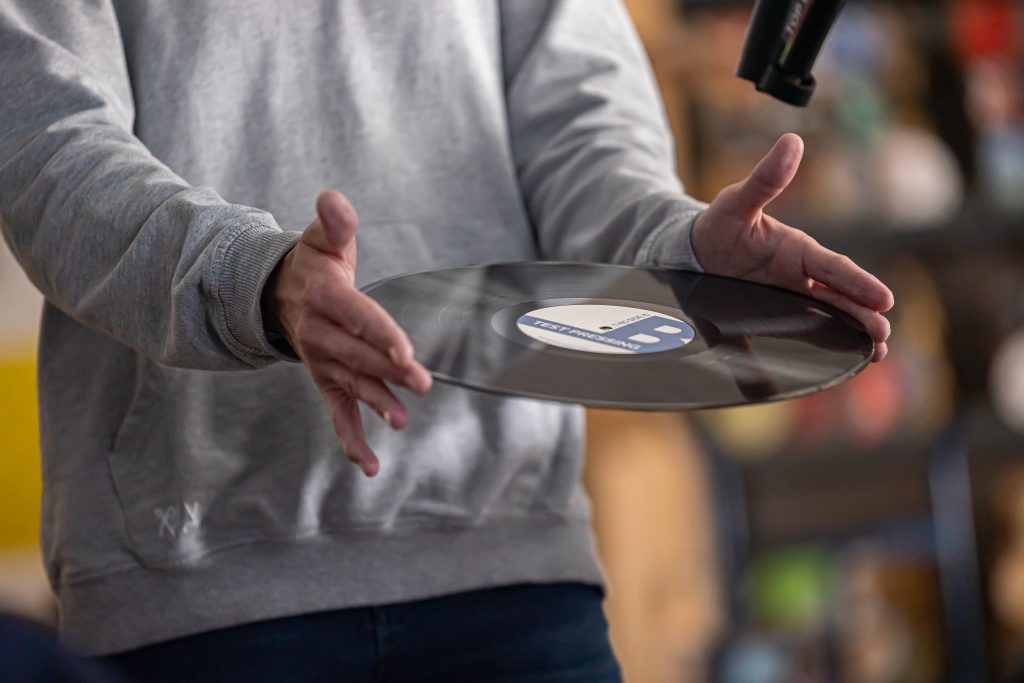

Pressing a flawless, high-quality vinyl record is only the first half of the analog journey. The second half happens in your living room. The only point of physical contact between your precious record collection and your sound system is a microscopic piece of industrial diamond: the stylus.
When it comes to extracting the truest sound from the grooves, the shape (or profile) of that diamond is everything. Different cuts rest differently in the V-shaped groove of the record, directly impacting detail retrieval, frequency response, and record wear. Here is a breakdown of the most common stylus shapes and what they mean for your listening experience.
1. Conical (Spherical) Styli: The Rugged Standard
The conical or spherical stylus is the most common and easiest to manufacture. As the name suggests, the tip is perfectly round, like a tiny ballpoint pen.
- How it tracks: Because it is spherical, it only touches the center of the groove walls and cannot reach the very bottom or trace the tightest, highest-frequency modulations.
- The Sound: It delivers a solid, punchy sound, but often lacks the high-end sparkle and fine detail of more advanced cuts.
- Best For: DJs and broadcasters. Its robust shape makes it incredibly forgiving and highly resistant to jumping out of the groove during back-cueing, scratching, or heavy vibrations.
2. Elliptical Styli: The Essential Upgrade
If you want to step into true high-fidelity audio, an elliptical stylus is the logical starting point. The diamond is polished to have a wider front and a narrower side profile, resembling an oval.
- How it tracks: The narrower side radius allows the stylus to track smaller, faster groove variations (which represent higher frequencies) much more accurately than a conical tip.
- The Sound: You will instantly notice a wider soundstage, crisper highs, and lower inner-groove distortion (IGD) towards the center of the record.
- Best For: Everyday listeners and audiophiles looking for a significant, cost-effective upgrade in clarity and dynamic range.
3. Microlinear (Micro-Ridge) Styli: The Precision Tracker
This is where engineering meets art. A microlinear stylus is uniquely laser-cut to mimic the exact shape of the cutting stylus used to create the master lacquer at the pressing plant.
- How it tracks: It features a complex, multi-faceted „ridge” that reaches incredibly deep into the groove, tracing areas that spherical and elliptical needles simply glide over.
- The Sound: Unmatched high-frequency retrieval and near-zero distortion. It extracts every hidden detail and nuance the artist intended.
- Best For: Dedicated audiophiles. Because it traces the groove so perfectly, it actually extends the lifespan of your records, though it requires meticulous tonearm alignment to perform correctly.
4. Shibata Styli: The Audiophile Legend
Originally developed in the 1970s to play ultra-high-frequency quadraphonic (4-channel) records, the Shibata cut remains one of the most revered stylus profiles in the analog world.
- How it tracks: It has an elongated, asymmetrical vertical contact area. Instead of touching a single point, it hugs the groove wall in a long, vertical line.
- The Sound: The Shibata offers an incredibly rich, velvety, and three-dimensional listening experience with a massive frequency response.
- Best For: High-end hi-fi systems. The wide contact area significantly reduces the pressure applied to the vinyl, minimizing record wear, but just like the microlinear cut, it demands perfect setup and calibration.
Ready to upgrade your listening experience? A worn-out or incorrectly shaped stylus doesn’t just sound bad—it can permanently damage the delicate grooves of your records. To get the absolute best out of your collection, including the pristine releases pressed right here at our plant, make sure your equipment is up to the task.
Browse our curated selection of premium audio gear and turntable accessories at the Hanaton Shop.