
When the final mix is finished after weeks in the studio and your tracks sound huge and loud on digital platforms, it’s easy to think the engineering work is done. However, the reality is that audio optimized for digital streaming (Spotify, Apple Music) is rarely suitable for direct vinyl pressing.
Unlike digital files, a vinyl record is a physical medium governed by strict acoustic and mechanical rules. If these rules are ignored, the result will be a distorted, unenjoyable, or even unplayable record. This is exactly where a dedicated vinyl master comes in.
Digital Sound vs. Physical Grooves
In the digital realm, sound is just data with no physical limitations. You can push limiters and compressors to the extreme to make the music as loud as possible (the infamous „Loudness War”).
For vinyl, however, sound must be carved into physical grooves that a tiny diamond stylus will later trace. If you try to cut a digitally over-compressed, max-volume track onto a record, the cutting head simply cannot track the signal smoothly, and the needle can literally jump right out of the groove during playback.
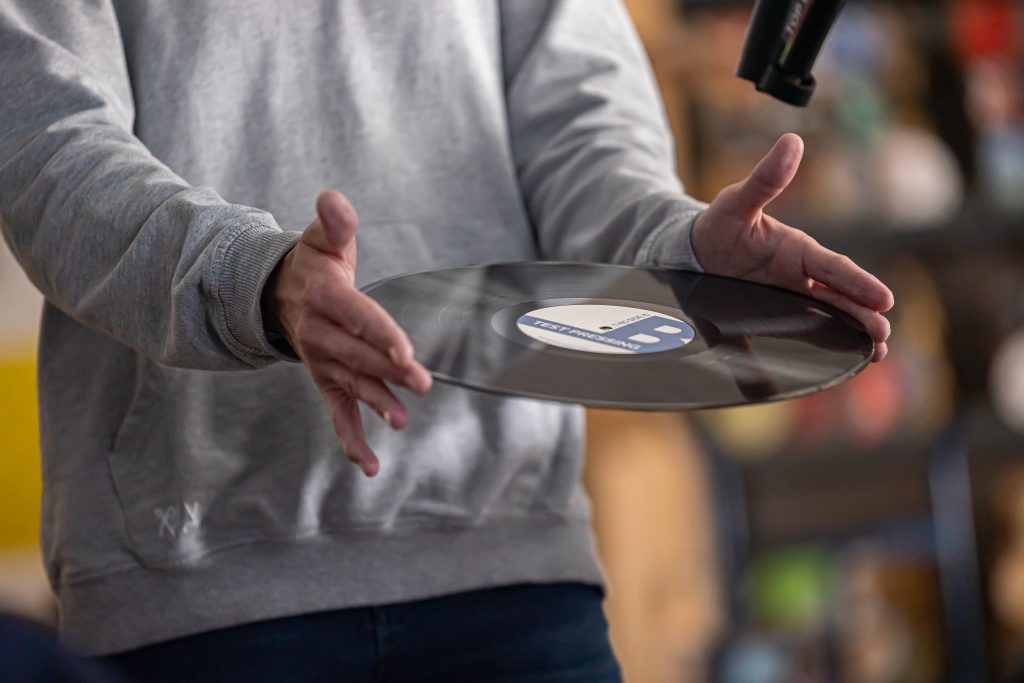
Our expert engineers know exactly what keeps the stylus perfectly in the groove. HANATON provides professional assistance throughout the entire vinyl mastering process. Trust us with your audio optimization so your music sounds truly premium!
What Does a Vinyl Mastering Engineer Do?
During the preparation for pressing, mastering engineers make highly specific adjustments to the audio so the cutting stylus can safely transfer the information to the lacquer. The most critical steps include:
- Bass Management: On vinyl, wide stereo bass with phase issues is a physical impossibility. If the low end is spread out too wide, the stylus will lose its tracking. During mastering, low frequencies (usually below 150-300 Hz) must be carefully centered and summed to mono.
- Taming High Frequencies: Excessively sharp sounds (like heavy vocal sibilance or harsh cymbals) can easily overheat the cutting head and cause unpleasant, frying distortion upon playback. These high frequencies must be precisely controlled.
- Preventing Inner Groove Distortion (IGD): As the stylus moves closer to the center of the record, the physical space for the grooves becomes smaller, which can naturally lead to high-frequency distortion. A good vinyl master dynamically prepares the audio so that the tracks at the end of the side sound just as clear as the first track.
- Restoring Dynamic Range: Vinyl loves dynamics—the delicate interplay between quiet and loud sections. A mastering engineer lets the music „breathe,” preserving the natural depth and spatial feel of the original recording.
The Ultimate Investment in Your Music
Releasing a vinyl record is a serious physical and financial commitment. The most advanced pressing plant in the world cannot make a great-sounding record from poorly prepared audio. A dedicated vinyl master isn’t just an optional extra step—it is the ultimate guarantee that when your fans drop the needle, they experience the warm, rich, and analog sound that makes this format so legendary.